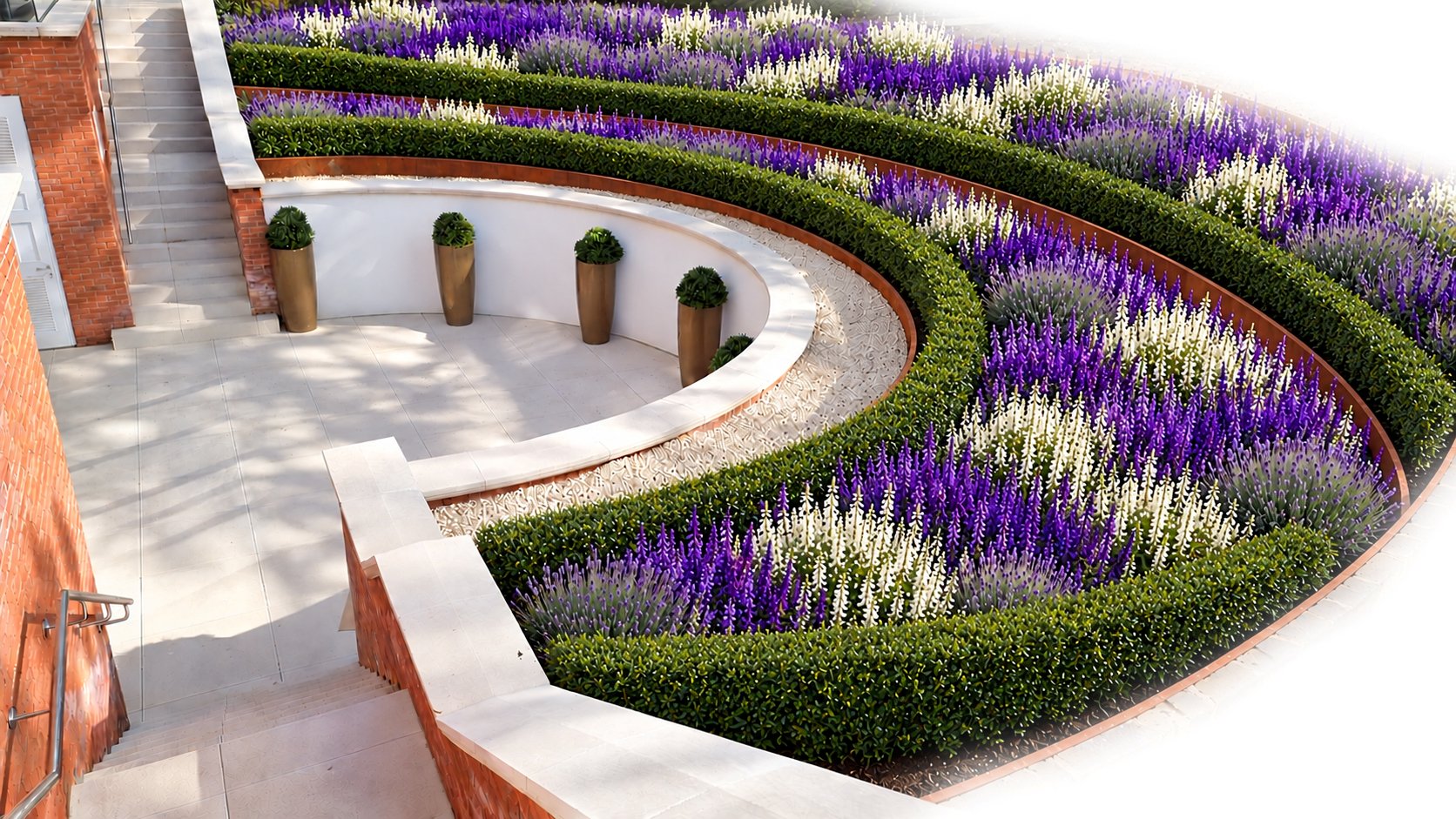
Designing a terraced garden means considering how planting is seen from above and below. On a private residential project in Surrey, we’re exploring how a simple planting palette can soften curved terraces around a sunken courtyard.
The Corten steel edges give the space a strong shape, so we’ve kept the planting palette to just three plants: Salvia nemorosa ‘White Profusion’, Salvia nemorosa ‘Violet Profusion’ and Lavandula angustifolia ‘Hidcote’. Repeated in generous groups, these would bring colour and softness while connecting the different levels.
Our design studies explore three variations: a low evergreen hedge at the back, a hedge at the front, and clipped domes dotted through the planting. Each gives the space a different character and provides evergreen structure when the salvias die back in winter.
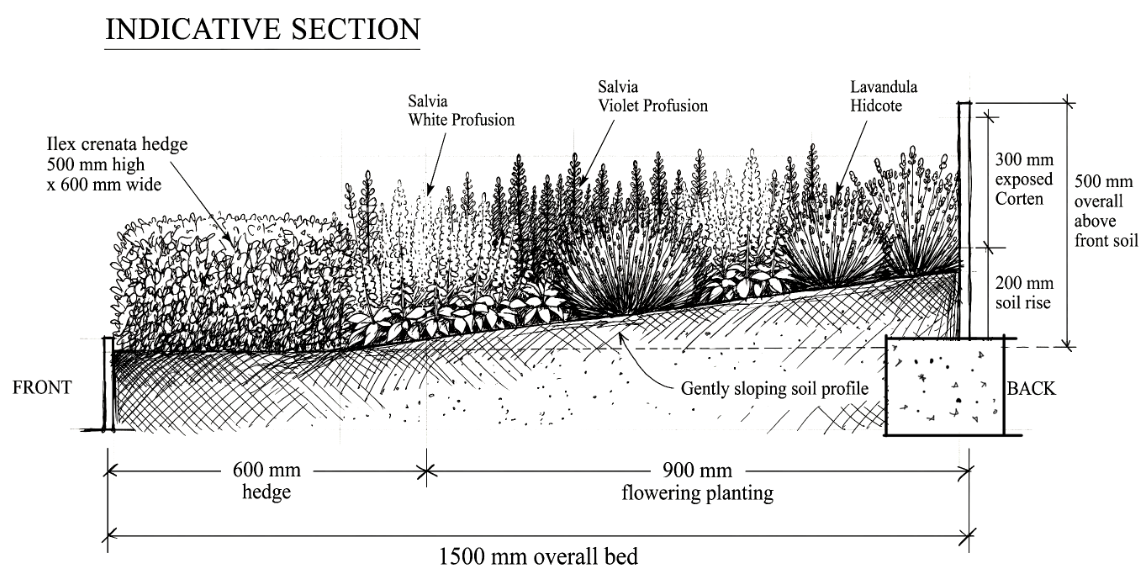
We’re also considering a gentle rise in the soil towards the back of each bed. A rise of just 150–200 mm could make the flowers more visible behind the hedge, particularly from the courtyard below. Section sketches help us test this against the available planting width, soil depth and retaining heights.
Drainage and maintenance access will also inform the final layout. These early studies give us a useful way to discuss the options with the client before developing the detailed planting plans.
Working with levels is an important part of our residential landscape design. Small adjustments to soil profiles and planting positions can make a noticeable difference to how a garden looks and feels.
Planning a garden with changes in level? Contact Studio Loci to discuss your project.